Network Detection and Response
Detect threats. Prioritize risk. Respond faster.
Know which systems are at risk.
Act before threats spread.
Attackers only need one successful compromise to gain a foothold inside the environment. The challenge is not collecting more alerts. It is identifying which hosts require attention and responding before an incident escalates.
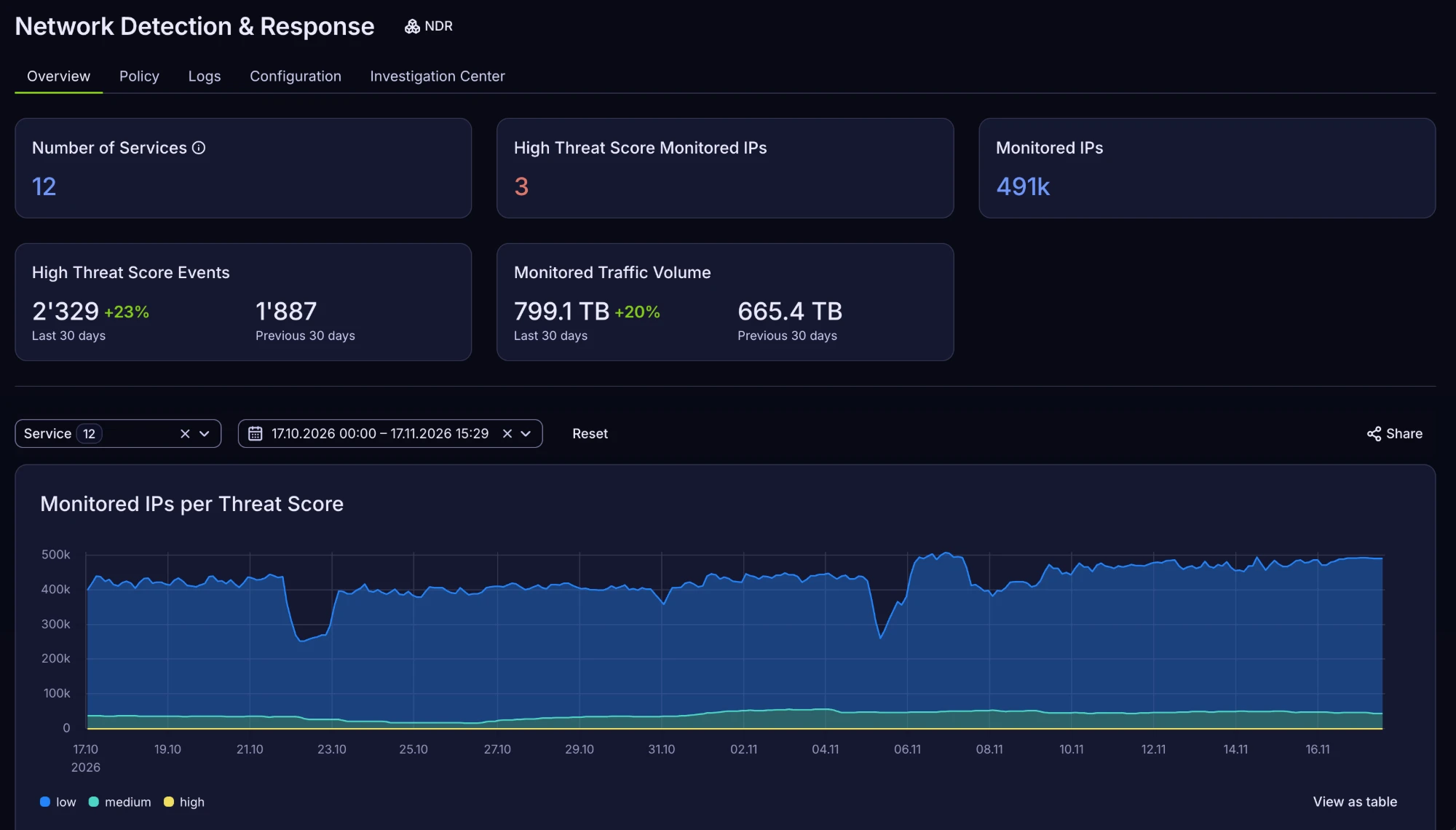
Open Systems NDR correlates network events, enriches them with multiple threat intelligence sources and AI-assisted contextual analysis, and assigns a threat score to every monitored host. By focusing on hosts rather than isolated events, NDR provides the context needed to prioritize investigations, reduce noise, and focus resources on the highest-risk systems. This helps security teams detect threats faster, contain incidents sooner, and reduce the risk of lateral movement and business disruption.
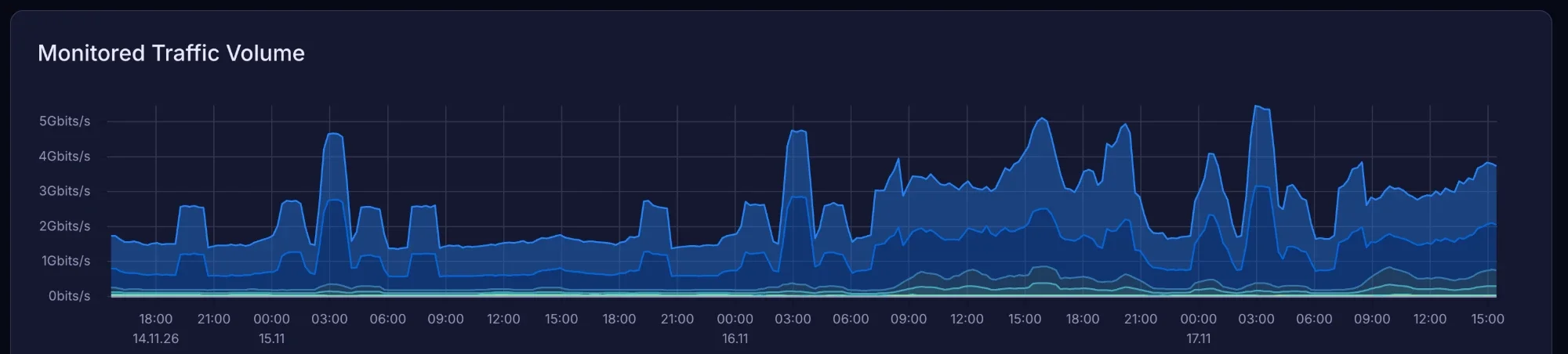
Detection, prioritization, and response.
- Network activity is continuously monitored through Open Systems Firewalls, Secure Web Gateways, or dedicated NDR sensors.
- Events are analyzed and enriched using signature- and anomaly-based detection, threat intelligence, and contextual information.
- Related events are correlated across the environment to identify patterns, reduce noise, and improve detection accuracy.
- A threat score is assigned to each monitored host, helping prioritize systems that require attention based on overall risk rather than individual events.
- Threats are surfaced for investigation and response through dashboards, workflows, and operational tooling.
- Feedback loops can be managed by your team, AI-assisted through Lucy, or supported by Mission Control experts to continuously improve prioritization, investigation, and response outcomes.
Benefits.

Focus on what matters
Threat scores prioritize hosts based on overall risk, helping teams focus on the systems that require attention instead of chasing individual alerts.

Investigate with context
Host-centric analysis combines network activity, threat intelligence, and historical behavior to provide the context needed for faster and more confident investigations.

Reduce alert fatigue
Event correlation filters out low-value noise and surfaces the activity most relevant to security operations, making NDR effective even for smaller teams.

Respond faster
Integrated workflows, automation, and optional expert support help accelerate threat analysis, containment, and remediation.
Part of Threat Defense.
NDR is included in the Threat Defense module together with Network Analytics, providing visibility, threat detection, prioritization, and investigation capabilities from a single service offering.
Questions about NDR.
What information is used to calculate a threat score?
What happens when suspicious activity is detected?
Who investigates and responds to detected threats?
How is Open Systems NDR different from traditional IDS and IPS solutions?
Can my team realistically manage NDR?
Detect fast, assume breach.
How detection and response work when you act on real risk, not noise.

To block or not to block: building an IPS that works
How our NDR team built intrusion prevention that is fast, accurate and reliable in the real world.
Read the blog →
Assume breach, detect fast: the role of NDR
Why network detection and response is now core to modern security.
Read the blog →
From minutes to seconds: the engineering behind smarter alerts
The alerting engineering NDR builds on: fewer misfires, and alerts in seconds instead of minutes.
Read the blog →Leave complexity behind.
See how Open Systems NDR helps your team detect, prioritize and respond to threats inside your network.
Contact us →