SASE Myths: Five Things You Thought You Knew - Debunked
Five common SASE claims, checked against reality.

Why it is worth reading
Since Gartner defined SASE in late 2019, vendors have crowded into the space with their own interpretations - and the marketplace continues to be plagued with misconceptions. For IT decision-makers still unclear about what SASE really delivers, separating facts from fiction is step one.
This white paper takes on the five most common myths: that SASE is a minor SD-WAN upgrade, strictly cloud-based, a substitute for good connectivity, all the security you will ever need, or automatically simpler to run. Each claim gets a short, technically grounded rebuttal - and a picture of what a genuine SASE architecture looks like instead.
What is inside
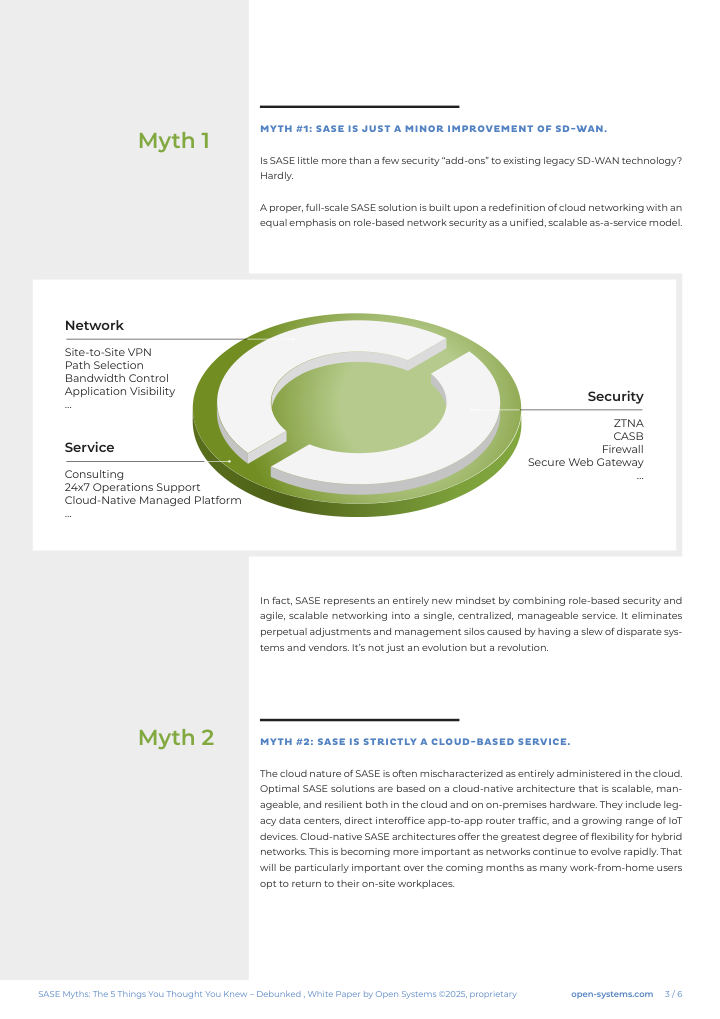
- Myth 1: Just a minor SD-WAN upgradeWhy combining role-based security with agile, scalable networking in one service is a new mindset, not an add-on.
- Myth 2: Strictly a cloud-based serviceCloud-native SASE architectures also cover on-premises hardware, legacy data centers and a growing range of IoT devices.
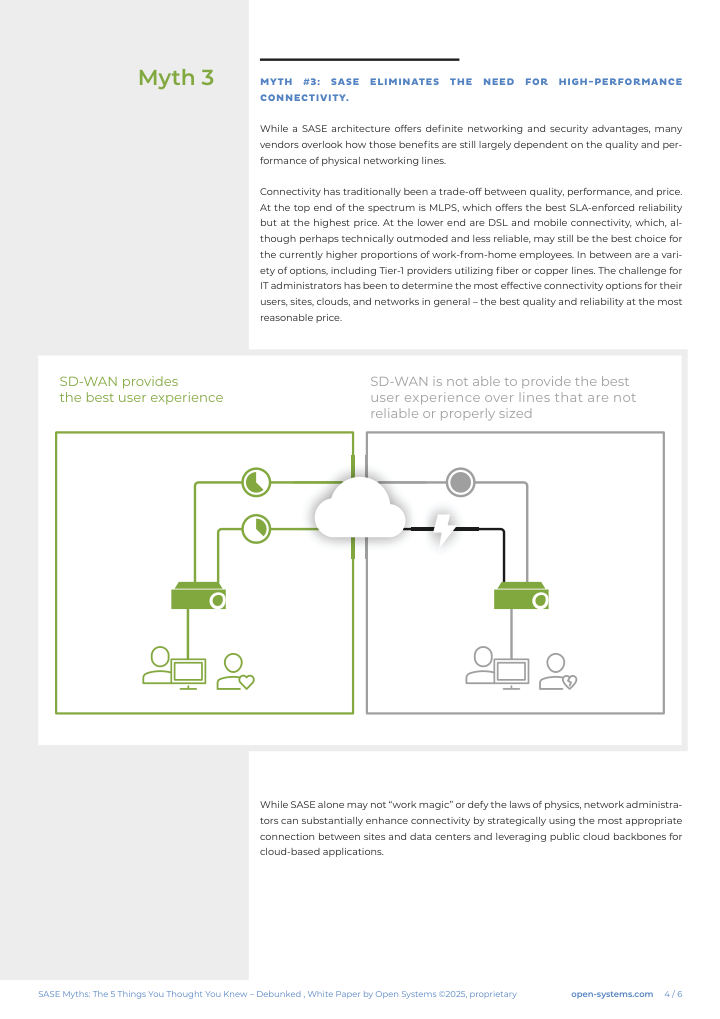
- Myth 3: No need for good connectivitySASE benefits still depend on the quality and performance of the physical lines underneath - from MPLS to DSL.
- Myth 4: All the cybersecurity you needAn assume-breach mindset with detection and response stays necessary; SASE is the foundation, not a turnkey defense.
- Myth 5: Dramatically simpler managementPatchwork sub-vendor stacks and the customization every rollout needs push real complexity to the vendor backend.

SASE is never a one-size-fits-all solution.Who it is for
- IT decision-makers evaluating SASE vendor claims
- Network architects weighing SD-WAN add-ons against full SASE
- Security leaders separating marketing from architecture
Founded in Switzerland. Backed by Swiss Post.
Founded in Switzerland in 1990, Open Systems generates more than USD 100 million in annual revenue and supports global enterprise customers operating in more than 180 countries. Since 2024, the company has been part of Swiss Post, combining Swiss trust and stability with global reach. As a European alternative to US- and Israel-based cybersecurity providers, Open Systems is guided by strong principles around sovereignty requirements, regulatory alignment, transparency and shared responsibility - taking clear ownership for security, performance and operational outcomes, helping organizations maintain control in an increasingly complex digital landscape.
Autonomous SASE. AI-run. Human-backed.
You might also like.
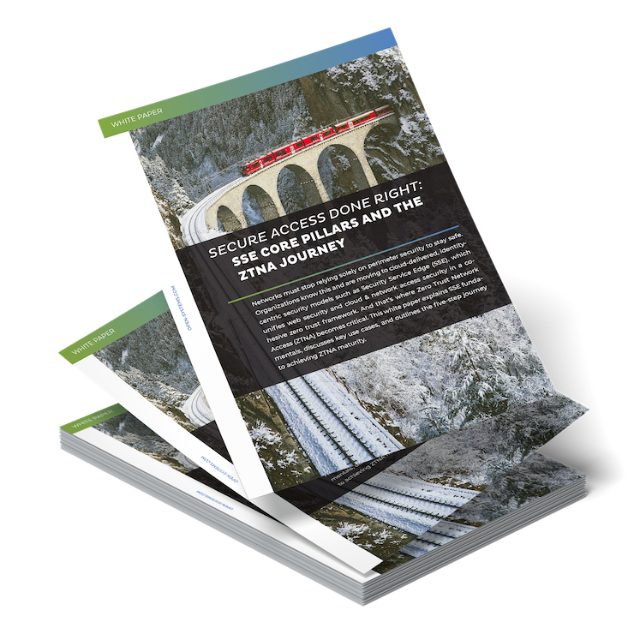
Secure Access Done Right
How SSE and ZTNA work together on the way to a zero-trust setup.
Read more →
Leaving Complexity Behind: Open Systems SASE Experience
The case for running SASE as one service instead of a stack of tools.
Read more →
From Silos to Synergy: How ZTNA Thrives within SASE
Why ZTNA works best as part of a converged platform.
Read more →