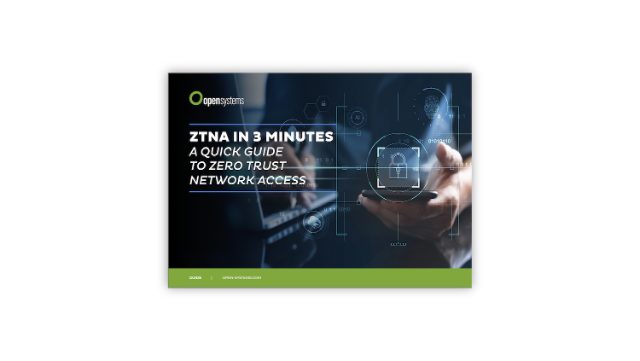
ZTNA in 3 Minutes: A Quick Guide to Zero Trust Network Access
The fastest useful answer to "what is ZTNA?"
Why it is worth reading
Hybrid work broke the old access model: people work from anywhere, on any device - and not everybody needs access to everything. Zero Trust Network Access (ZTNA) is how organizations enforce exactly that: who gets access to what, and under which circumstances.
This guide is built for skimming. It explains what ZTNA actually is, clears up what it is not - a fancier VPN, or a remote-only affair - and walks through the five things to sort out before integrating it, from the first plan to the operating model and the partner choice.
What is inside
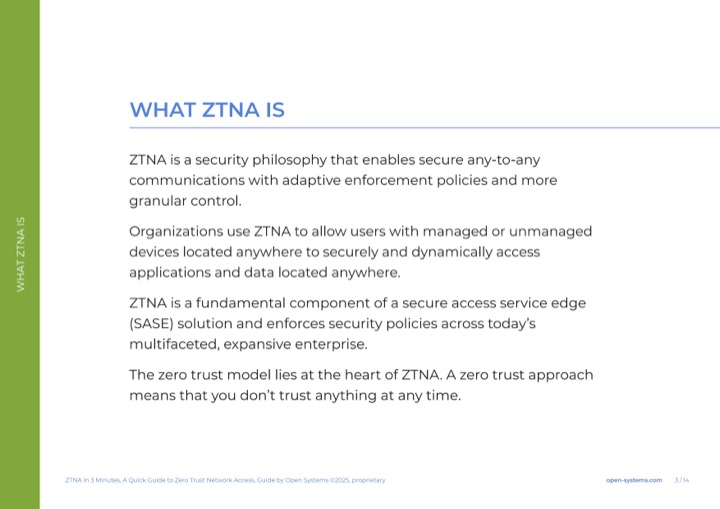
- What ZTNA isAdaptive policies built on user identity, device posture, location and time - control far more granular than go/no-go.
- What ZTNA is notNot a glorified VPN, not just for remote users, and not limited to corporate applications.
- Five things to consider before integratingStart with a plan, pace the rollout, prepare for granular policy work, decide on an operating model.
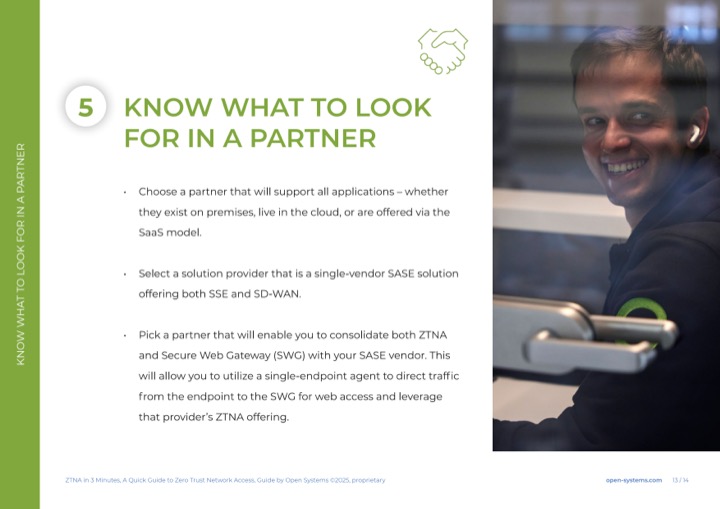
- What to look for in a partnerSingle-vendor SASE, ZTNA and SWG consolidated, and no enterprise credentials stored in the cloud.

ZTNA is not a glorified version of remote access or a new variety of VPN.Who it is for
- Network and security architects weighing ZTNA against VPN
- CISOs and IT leaders planning a zero trust rollout
- Anyone who has to explain ZTNA to the board in minutes
Founded in Switzerland. Backed by Swiss Post.
Founded in Switzerland in 1990, Open Systems generates more than USD 100 million in annual revenue and supports global enterprise customers operating in more than 180 countries. Since 2024, the company has been part of Swiss Post, combining Swiss trust and stability with global reach. As a European alternative to US- and Israel-based cybersecurity providers, Open Systems is guided by strong principles around sovereignty requirements, regulatory alignment, transparency and shared responsibility - taking clear ownership for security, performance and operational outcomes, helping organizations maintain control in an increasingly complex digital landscape.
Autonomous SASE. AI-run. Human-backed.
You might also like.
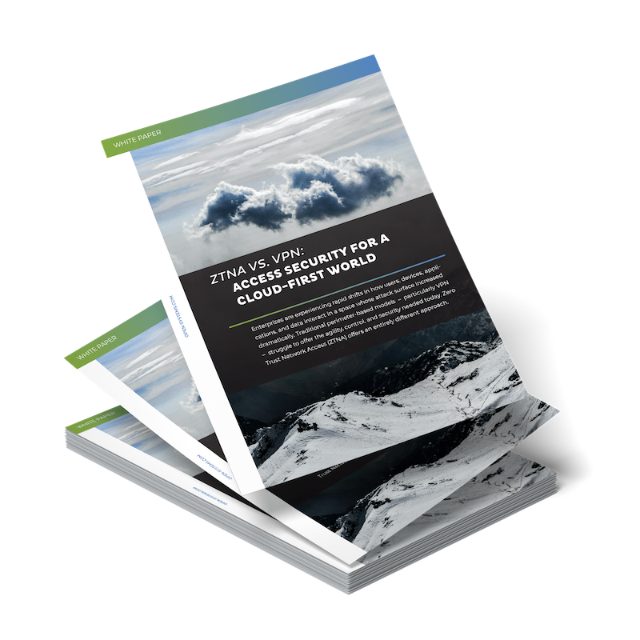
ZTNA vs. VPN: Access Security for a Cloud-First World
Why identity-based access replaces the VPN, and how to get there without breaking daily work.
Read more →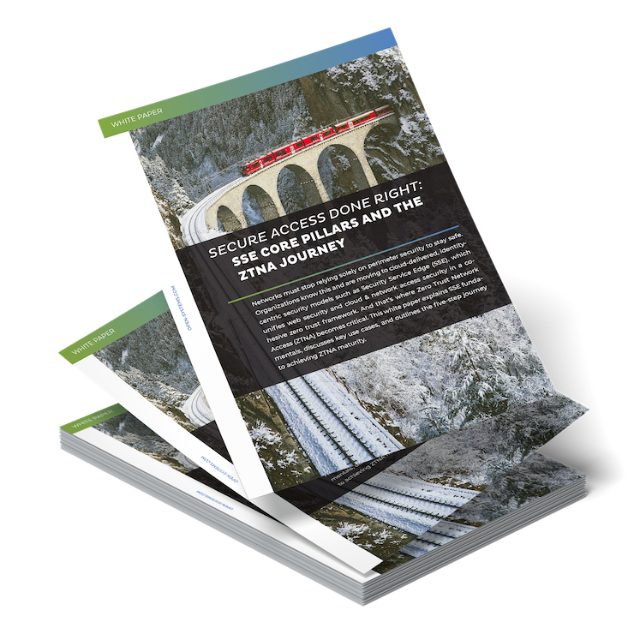
Secure Access Done Right
How SSE and ZTNA work together on the way to a zero-trust setup.
Read more →
Financial Services
A global financial firm moved to ZTNA and cloud proxies: secure access worldwide, minimal IT effort.
Read the story →