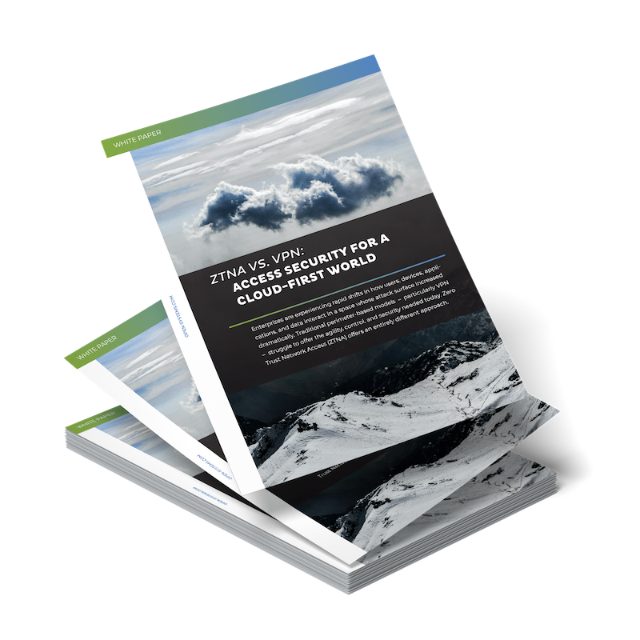
ZTNA vs. VPN: Access Security for a Cloud-First World
Why identity-based access replaces the VPN, and how to get there without breaking daily work.
Why it is worth reading
Hybrid work, cloud adoption and distributed supply chains have expanded the attack surface dramatically - and exposed the central weakness of perimeter-based security: once a user is inside, the network trusts them too much. No wonder 90% of organizations report one or more issues with their current VPN.
This white paper examines ZTNA and VPN side by side: how each one works, where VPN's implicit trust, lateral movement risk and operational overhead hurt, and a direct comparison across five dimensions from security model to cloud readiness. It closes with the key considerations for choosing a solution - who needs access to what, security needs, cost and future readiness.
What is inside
- The new access realityWorkflows span clouds, vendors and distributed teams while attackers exploit any foothold to move laterally.
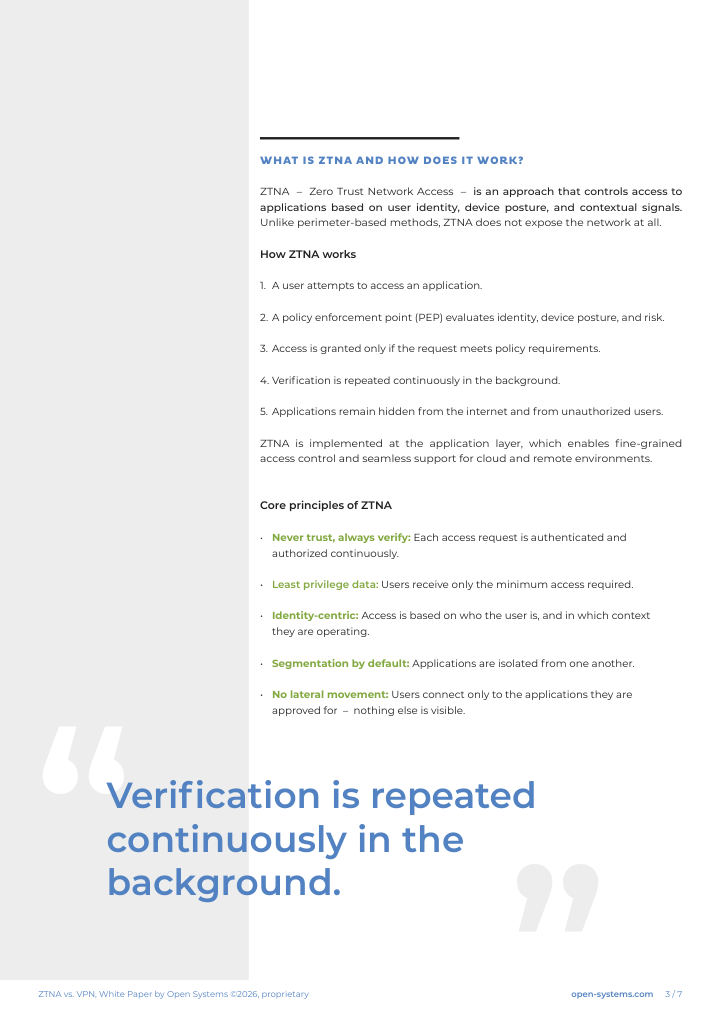
- What ZTNA is and how it worksIdentity, device posture and context checked continuously - applications stay hidden from the internet and unapproved users.
- What VPN is and its limitationsImplicit trust after the tunnel is up, high lateral movement risk, operational overhead and poor cloud alignment.
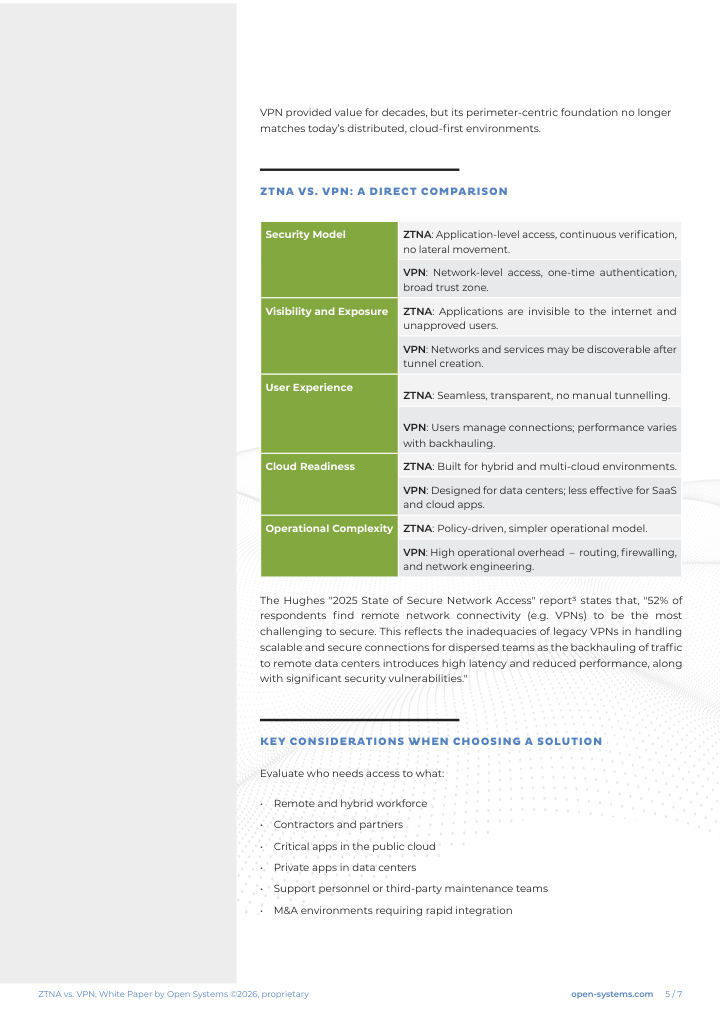
- ZTNA vs. VPN: a direct comparisonFive dimensions side by side: security model, visibility and exposure, user experience, cloud readiness, operational complexity.
- Key considerations when choosingMap who needs access to what - from hybrid workforce to M&A environments - then weigh security needs, cost and scalability.

Once a user is inside, the network trusts them too much.Who it is for
- Network and security architects planning a VPN replacement
- CISOs building a Zero Trust roadmap for cloud-first environments
- IT leaders managing access for contractors, partners and M&A integrations
Founded in Switzerland. Backed by Swiss Post.
Founded in Switzerland in 1990, Open Systems generates more than USD 100 million in annual revenue and supports global enterprise customers operating in more than 180 countries. Since 2024, the company has been part of Swiss Post, combining Swiss trust and stability with global reach. As a European alternative to US- and Israel-based cybersecurity providers, Open Systems is guided by strong principles around sovereignty requirements, regulatory alignment, transparency and shared responsibility - taking clear ownership for security, performance and operational outcomes, helping organizations maintain control in an increasingly complex digital landscape.
Autonomous SASE. AI-run. Human-backed.
You might also like.
Secure Access Done Right
How SSE and ZTNA work together on the way to a zero-trust setup.
Read more →
From Silos to Synergy: How ZTNA Thrives within SASE
Why ZTNA works best as part of a converged platform.
Read more →
VPN vs. SSO vs. ZTNA - What Is Future-Built Access Control
Three access models compared, and which one scales.
Read more →